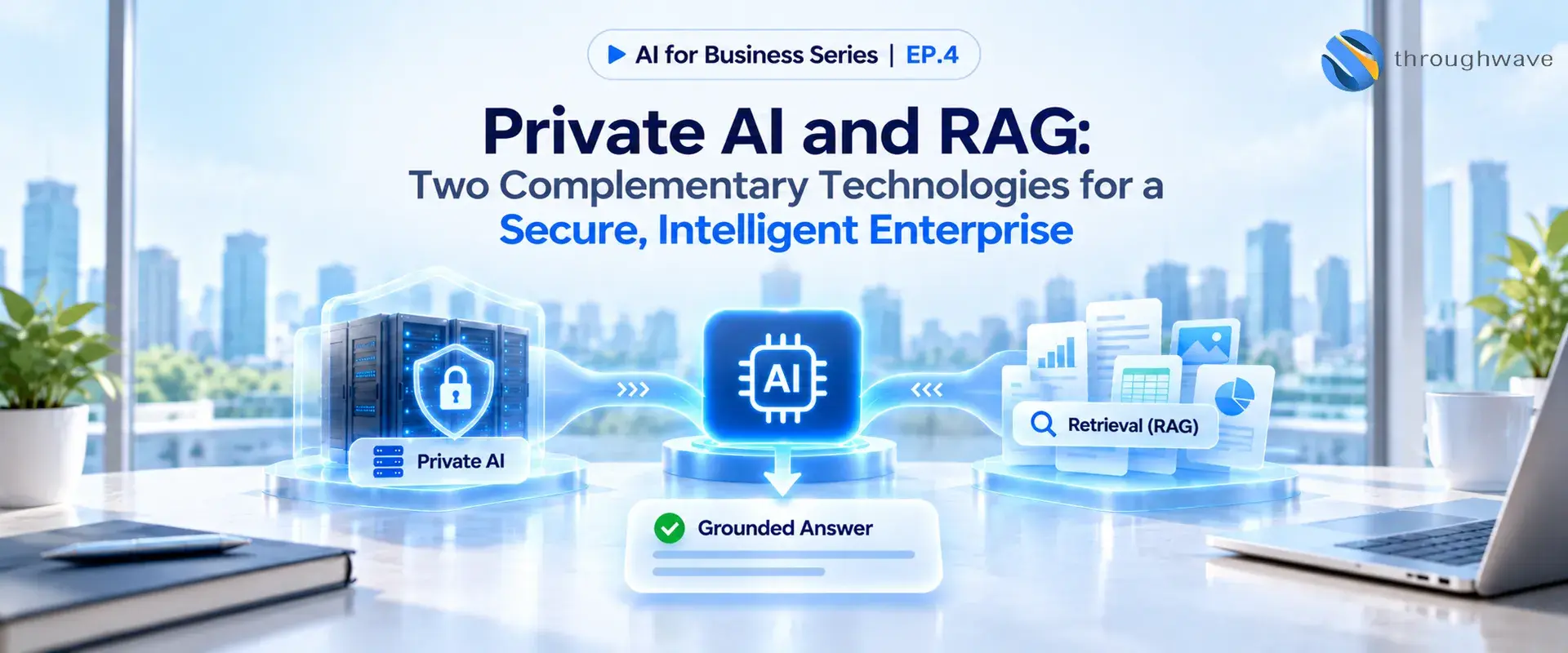
AI for Business Series | EP.4 — Private AI and RAG: Two Complementary Technologies for a Secure, Intelligent Enterprise
Clearing Up the Confusion: Private AI and RAG Are Not the Same Thing
When organizations begin planning their AI strategies, two terms come up repeatedly: Private AI and RAG. This can sometimes lead to the misconception that one is the same as the other, or that having either one will meet every requirement.
In reality, Private AI and RAG address different needs. An effective Enterprise AI architecture often requires combining the strengths of both.
In this episode, we take a closer look at how they differ structurally, helping organizations choose the right architecture for their data risk profile and budget (CAPEX/OPEX).
Private AI: Defining “Control” and Sovereignty
At the enterprise level, Private AI does not simply mean installing servers within the company (on-premises). It refers to the degree of control an organization has over different aspects of its AI system, including:
- Data Sovereignty: Where is data processed and stored? Which jurisdiction’s data protection laws apply?
- Infrastructure Control: How much control do we have over hardware performance and security?
- Security & Privacy: Do access controls and logging comply with the organization’s policies?
- Data Retention: Will data submitted to the AI be used to train the external provider’s models?
Private AI can therefore take many forms, from using a highly secure Private Cloud or deploying in a Virtual Private Cloud (VPC), to running an air-gapped system in the organization’s own data center.
The key principle: Private AI addresses trust and security in the underlying infrastructure.
RAG: A Mechanism for “Knowledge Augmentation”
While Private AI focuses on controlling the environment, RAG (Retrieval-Augmented Generation) focuses on connecting AI to an organization’s knowledge base. It retrieves relevant information and provides it as context to the model while it processes a question.
Key advantages of RAG include:
- There is no need to retrain the model, a process that can be costly and time-consuming.
- Reference information stays up to date as long as the knowledge base is updated.
- It can reduce the likelihood of hallucinations because the AI is expected to answer using the specified documents.
The key principle: RAG addresses accuracy and business-context awareness.
How They Fit Together: Four Deployment Architectures
The misconception that “having RAG means you have Private AI” can expose an organization to risk. Consider these four scenarios:
- RAG without Private AI: The organization retrieves internal information to provide context, but sends that information to an external public AI service for processing. Without robust privacy agreements, sensitive information could be exposed.
- Private AI without RAG: The organization securely runs a model on its own servers, but the model has no access to internal company information. The AI may be secure, but it cannot answer questions about the business.
- Neither: General-purpose AI is used to process general information. This may be suitable for public, general tasks, but not for enterprise workloads.
- Private AI + RAG: The most complete approach for an organization combines a controlled environment with a structured connection to internal data.
RAG: A Cost-Effective First Step Toward Private AI
For many organizations, starting with RAG is often a cost-effective strategy that can deliver value quickly (Low Risk, High Value), because it offers:
- Agility: Adapt quickly. When information changes, update the index instead of training the model again.
- Traceability: Show source references right away and build user confidence.
- Granular Access Control: Set data access permissions at the retrieval level, which is more difficult to achieve with a fine-tuned model.
- A Foundation for the Future: Data preparation done for RAG can become a valuable asset if the organization later decides to build its own custom model.
When Should You Move from RAG to Local Private AI or a Custom Model?
Moving processing in-house (local deployment) or developing a specialized model should be driven by measurable business needs:
| Signal | Business Implication | Recommended Direction |
|---|---|---|
| Highly sensitive data | Strict legal or PDPA requirements apply | Move to a Local or Private LLM |
| Rising API costs | Usage has grown to the point where OPEX exceeds the appropriate budget | Consider a Local LLM to shift some costs to CAPEX |
| Very low latency requirements | Real-time responses are needed at the point of use | Use a small, quantized model on Edge or on-premises infrastructure |
| Need for deeper understanding of specialized terminology | RAG is working well, but the AI still produces inaccurate summaries (EP.3) | Fine-tune with high-quality, labeled data (EP.2) |
| Vendor lock-in | The organization wants to avoid dependence on a single provider | Choose open-weight models that can run on infrastructure under the organization’s control |
A Phased Growth Strategy
Instead of making a large investment upfront, organizations can progress in stages:
1. Initial phase: Use RAG on Enterprise Cloud AI to prove its value through a PoC.
2. Expansion phase: Move to RAG on a Private Cloud or a Local LLM as more sensitive data comes into scope.
3. Optimization phase: Fine-tune specific areas to improve accuracy for specialized tasks.
4. Advanced phase: Develop a custom model for non-text data such as audio, images, or sensor data (EP.1).
This phased approach allows organizations to build skills and data assets while creating business value, without taking on more risk than necessary.
Strategic Conclusion
Choosing an architecture is not about deciding which technology is better. It is about choosing the right level of reliability, security, and intelligence for each use case.
If your organization is looking for the right balance between innovation and security, Throughwave can help design a flexible AI infrastructure—from selecting high-performance open-source models and sizing cost-effective hardware to implementing security and governance aligned with international standards.
Follow the AI for Business Series | EP.5: The Best AI Isn’t the Most Expensive One.
Looking for advice on implementing Private AI or RAG for your business? Throughwave’s engineers and specialists are ready to help design an architecture that meets your performance and budget requirements sustainably.
Related Articles
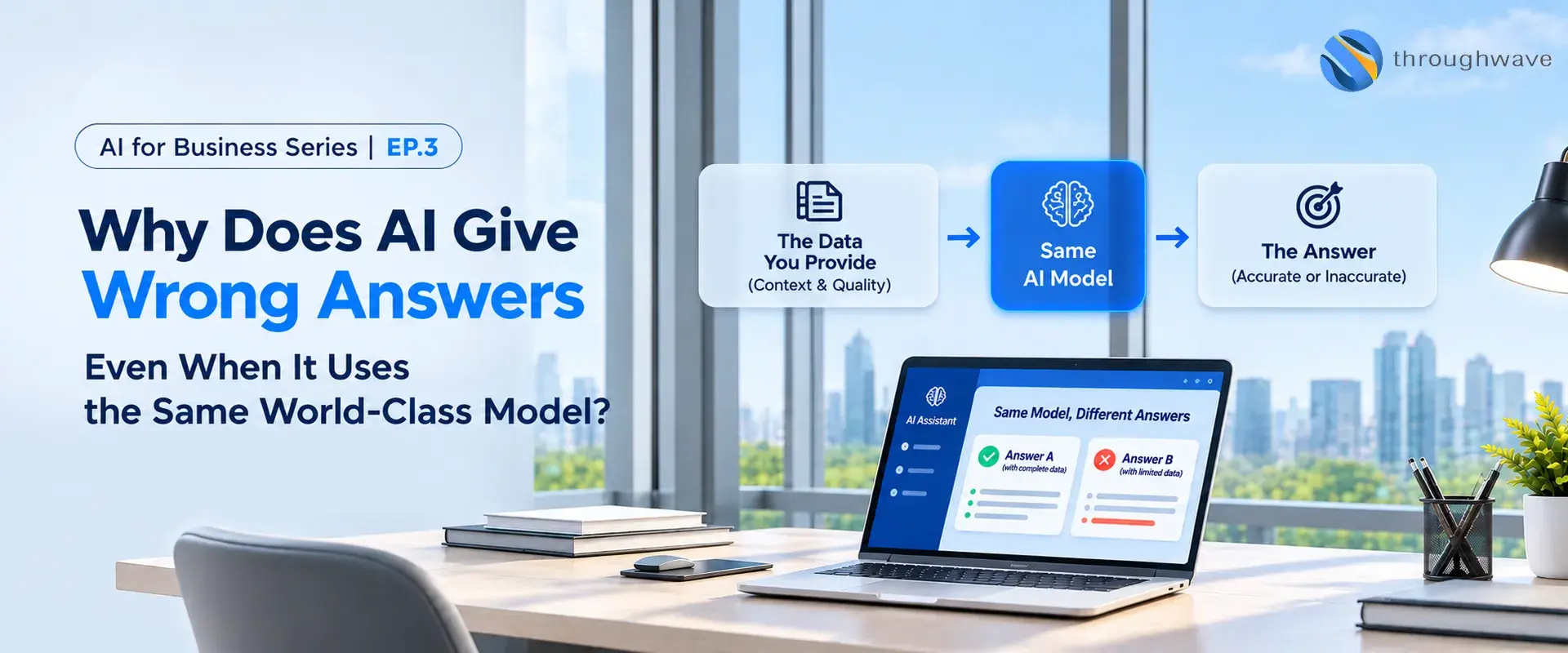
AI for Business Series | EP.3 — Why Does AI Give Wrong Answers Even When It Uses the Same World-Class Model?
11/2/2026
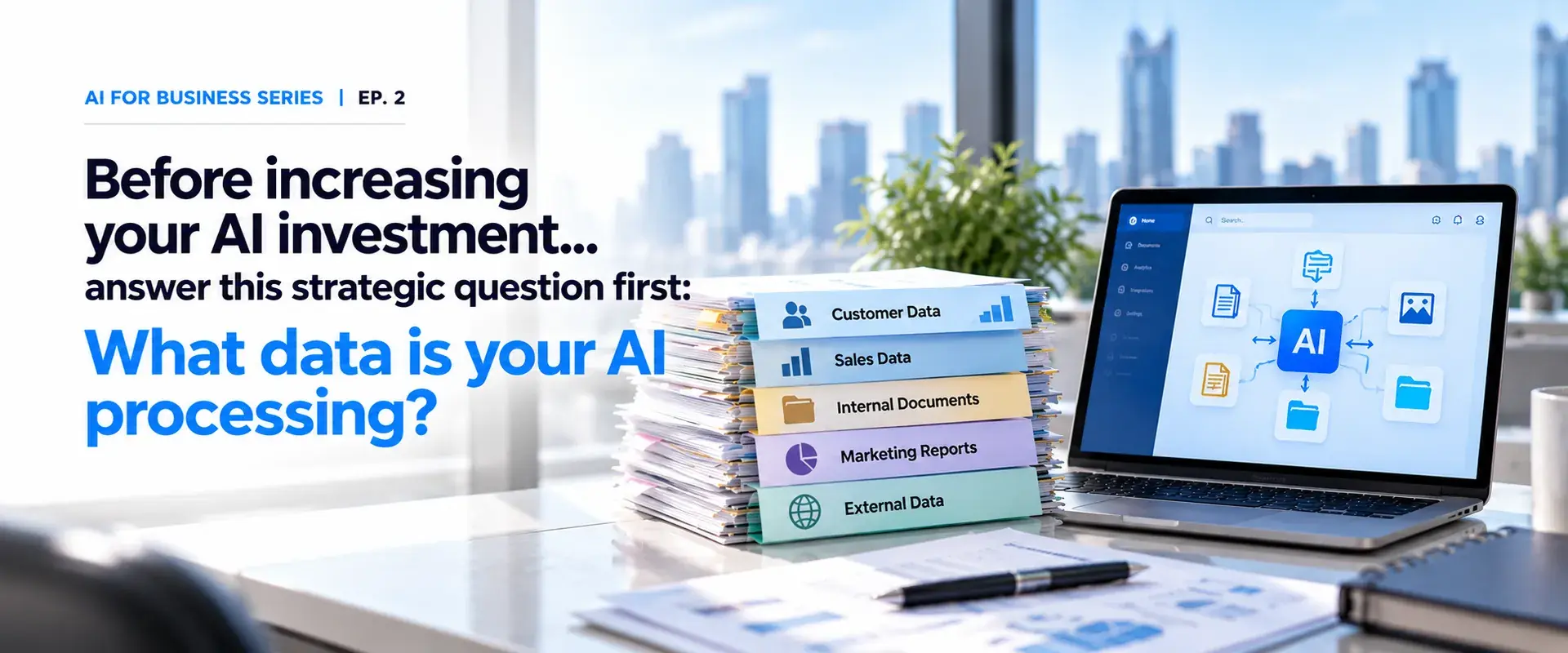
AI for Business Series | EP.2 — Before Increasing Your AI Investment, Answer This Strategic Question: What Data Is Your AI Processing?
10/28/2026
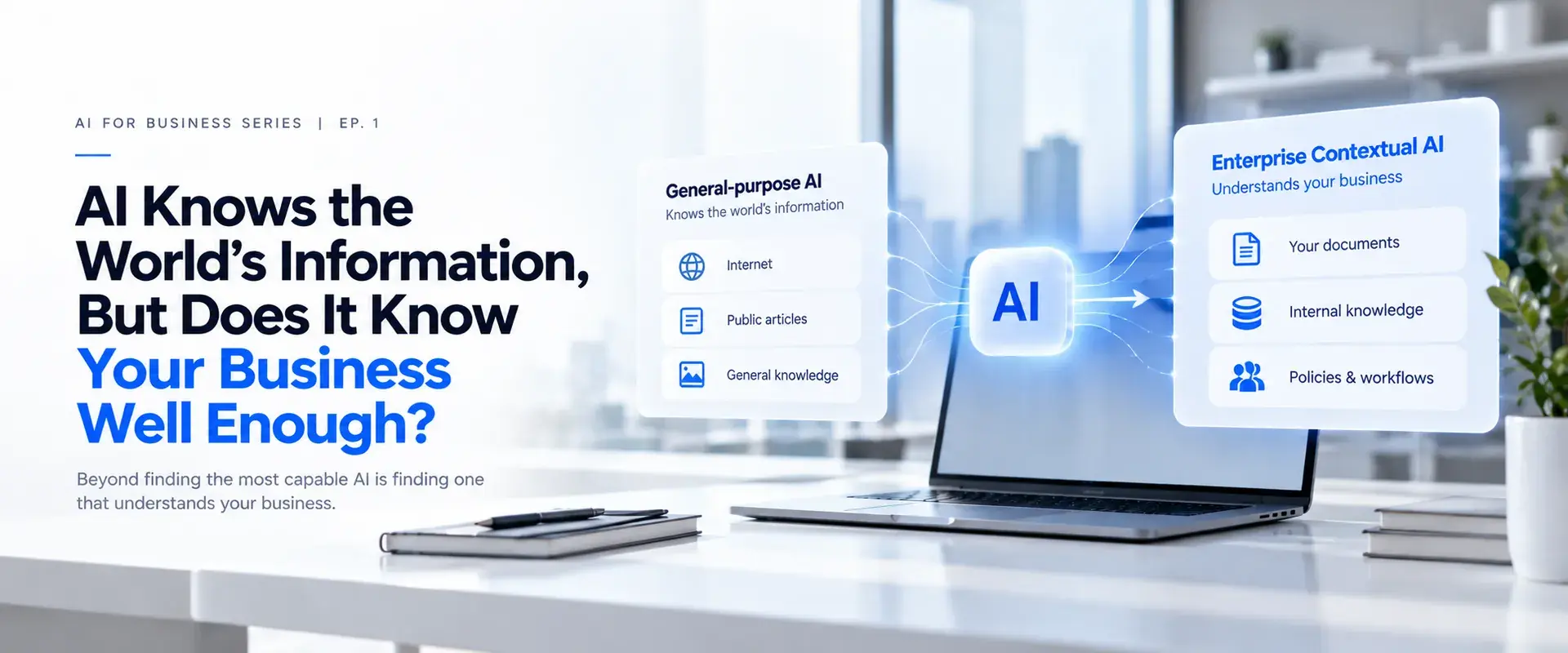
AI for Business Series | EP.1 — AI Knows the World’s Information, But Does It Know Your Business Well Enough?
10/20/2026